
Why Picking Your Own Workout Music Actually Works
My earbuds died four minutes into a stationary bike sprint set at the gym, on a Tuesday I’d already been dreading, the kind of interval where you push hard a minute and coast a minute, over and over. I usually get through twenty minutes of that. Without music I made it to twelve, decided my legs were done, and wheeled off the bike into the locker room sweating and annoyed at myself, mostly because those twelve minutes hadn’t actually been harder than usual. They just felt like it.
That’s the setup of a study a lot of people passed around this year. Researcher Andrew Danso and colleagues at the University of Jyväskylä’s Centre of Excellence in Music, Mind, Body and Brain had 29 recreationally active adults cycle at a hard, fixed workload above their anaerobic threshold, about 80 percent of peak power, on two separate visits: once with music they’d personally picked, once in silence. With their own music, people rode for an average of 35.6 minutes before quitting; in silence, that dropped to 29.8 minutes, almost six extra minutes at the same intensity, without rating the effort as feeling any harder. The results ran this spring in the journal Psychology of Sport & Exercise, a fairly dry home for a finding that basically says: bring your own songs.
What stood out to me wasn’t the tempo. Most people gravitated toward songs around 120 to 140 beats per minute, but personal preference mattered more than hitting an exact number; nobody was told to match their pedal stroke to the beat. It was that the songs were theirs, a much harder thing for an app to generate than a playlist sorted by tempo.
The playlist has to be yours, not just on
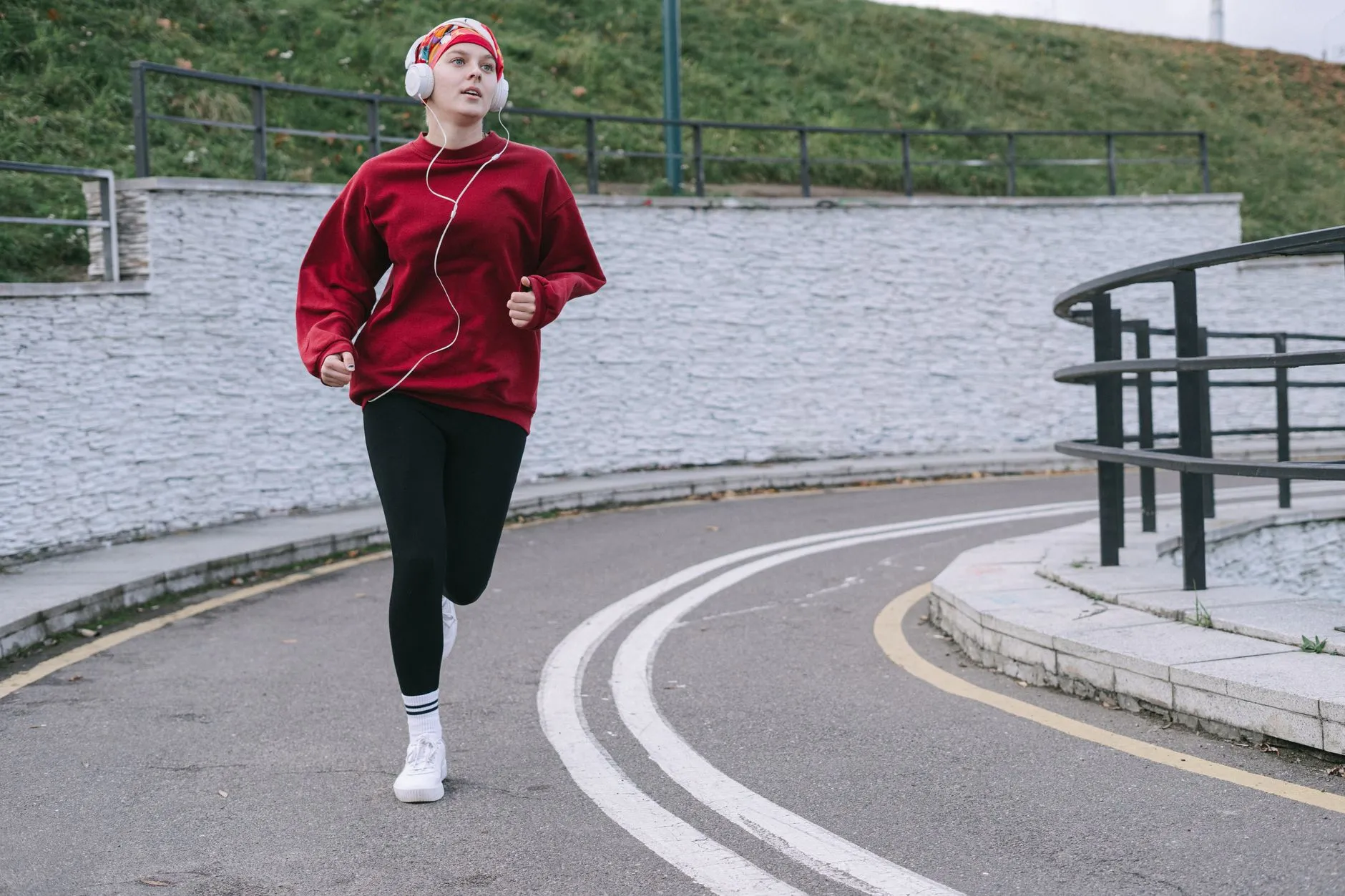
That tracks with something I’d noticed but never named. A few weeks after the dead-earbuds incident, I built an actual playlist before a Saturday run instead of hitting shuffle on some app-generated mix. Nothing curated for cadence or genre, just songs I’ve liked for years, including two I was mildly embarrassed to have on there. I ran past my usual turnaround point without noticing, because the next song was one I wanted to hear the end of, and by the time I checked my phone I’d added almost a mile I hadn’t planned on. Compare that to the gym’s overhead playlist, which I’ve never once wanted to keep hearing past my set.
That’s the distinction a lot of “best workout songs” lists miss. Self-selected music, chosen by the person sweating through the set rather than an app or the gym’s overhead speakers, is what moved the number in the study. Researchers think the effect is more about attention and mood than physiology: liked, familiar songs pull focus away from the discomfort signals your body sends once effort gets hard, so the same intensity reads as more tolerable. The extra minutes come from being willing to sit with that discomfort a little longer before your brain calls it, exactly the kind of shift a familiar song is good at making.
That’s narrower than the usual “get pumped up” advice before a hard session: hype videos and pre-workout playlists raise your arousal in general, which can backfire if you’re already anxious. Nobody in the Jyväskylä study was psyching themselves up. They just rode while songs they already liked happened to be playing, and that alone changed how long they lasted.
I don’t think this means every workout needs a soundtrack, or that silence is a mistake. Some of my best walks are quiet, and I’m not wiring up earbuds for a five minute warmup jog. Where it seems to matter is the part that’s already hard on its own: the last three intervals, the last set of squats before your legs give out, the stretch of a run where you start negotiating with yourself about turning around. That’s the exact zone the study tested: effort above the point where things start to hurt, where willpower runs out before muscles do.
Skip the algorithm-generated mix and the playlist someone else labeled “workout.” Next time you’ve got a session you’re already dreading, spend five minutes the night before picking ten or fifteen songs you’d actually choose to listen to in the car, save them somewhere you can hit play without thinking, and let them run past the point where you’d normally reach for your phone to stop.